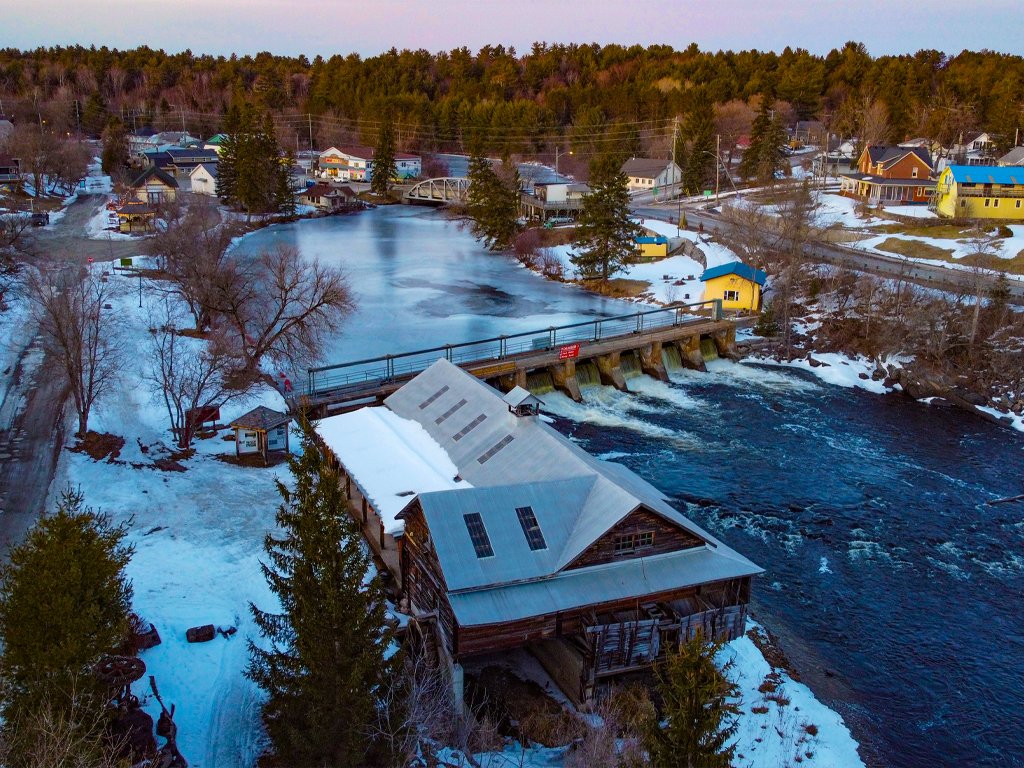
Austin Sawmill
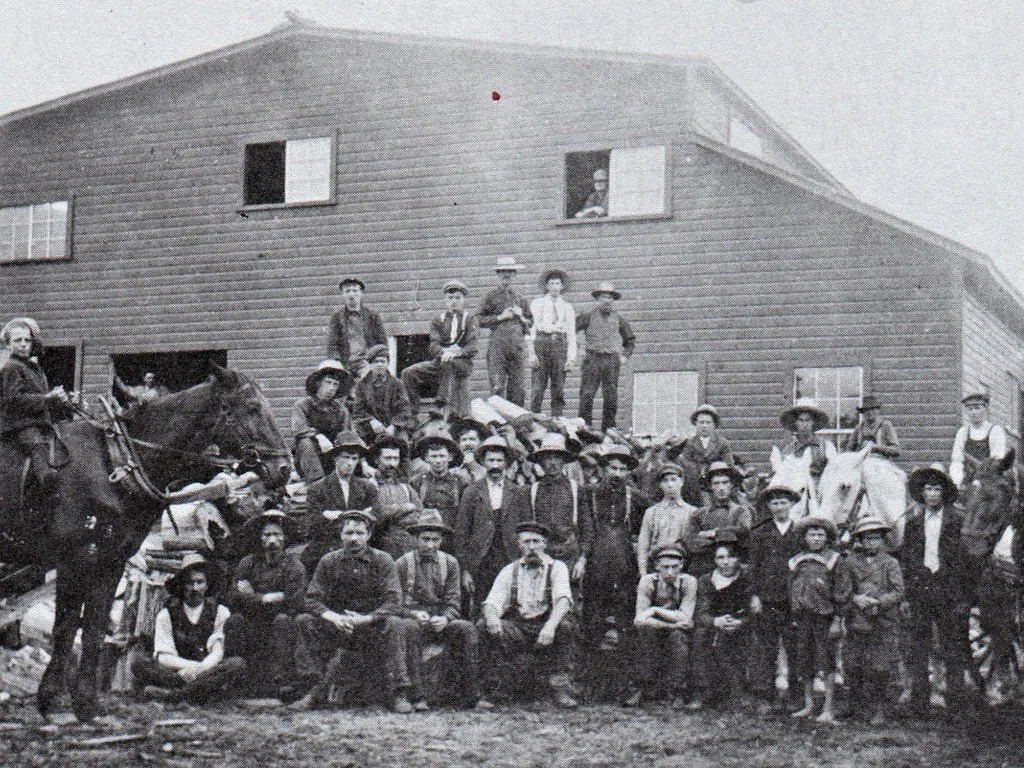
Crew at Austin Mill with horse
Kinmount grew as a focal point in the forest industries after the Bobcaygeon Road (similar to present-day 49, 121 and 35 from Bobcaygeon to Dwight) reached the village in 1858. Though the government built the road to open the region for agricultural settlement, it also became the main route north to supply logging camps. Kinmount was site of the bridge over the Burnt River, located just downstream from where the three main branches of the Burnt River converged. The same year that the road reached Kinmount, John Hunter built a sawmill on the east bank of the river, beside the road. Because the Burnt River was not navigable, there was no practical means of exporting large quantities of lumber, so the mill primarily served local needs.
In 1874, the construction of the Victoria Railway began, which linked Lindsay to Haliburton via Fenelon Falls and Kinmount. That year, Fenelon Falls sawmiller Henry Greene leased the west bank of the Burnt River at Kinmount, so he could build a sawmill between the river and the proposed railway. Once the railway was complete, logs coming down the Burnt River could be sawn at Kinmount, and the lumber loaded on the railway to ship to market. As the site with a waterpower that could operate a mill, with a railway connection, furthest upstream, capturing all three branches of the Burnt River, it had a natural advantage over practically all other milling sites in the district.
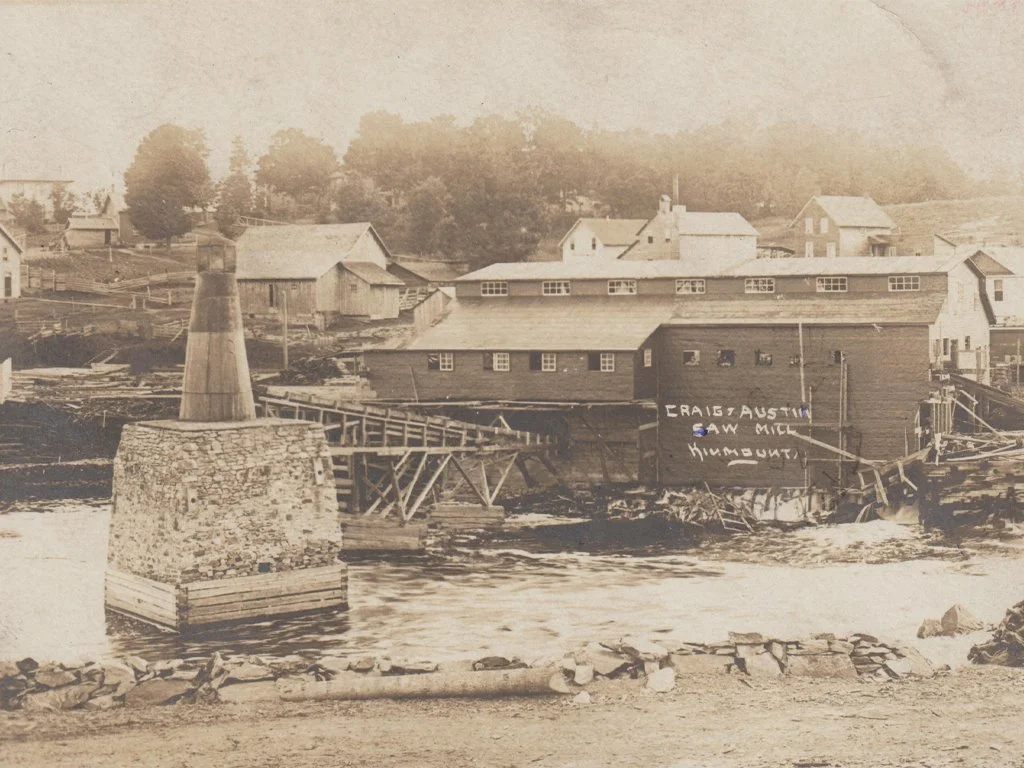
Looking Across Burnt River at Austin Mill
John Hunter sold his mill along with the surrounding 200 acres to William Cluxton in 1862 for $2,997. At some point after Greene built the new mill, the former sawmill ceased to operate. In 1883, Hugh O’Leary purchased the mill for $3,000, but he did not live in the village, instead, hiring workers to operate it. Three years later, Lindsay miller Robert Bryans purchased it. John Austin, of Fenelon Falls, worked at the mill, losing a finger in an accident in 1889.
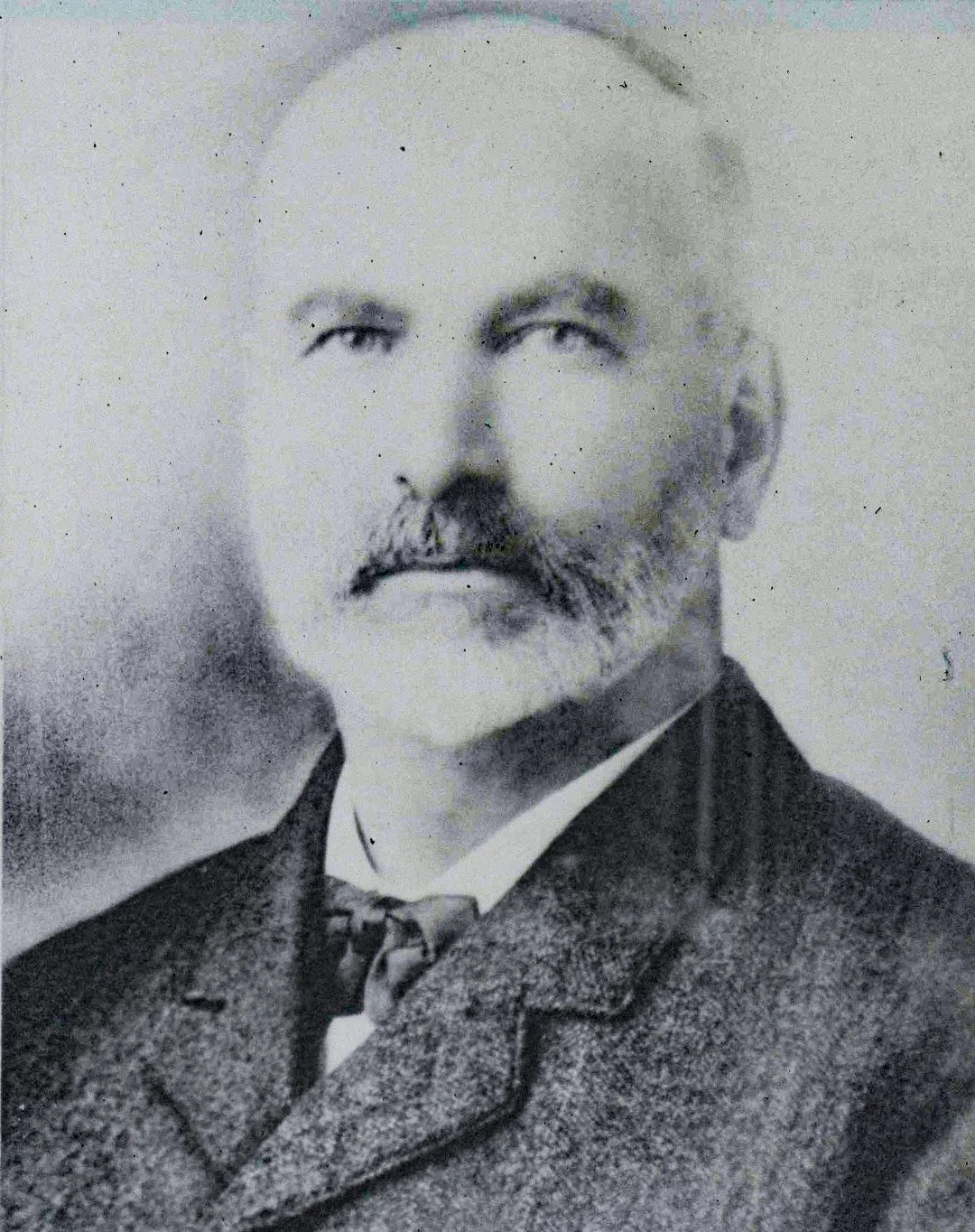
John Austin, 1902
In 1891, Austin partnered with William Craig to buy the sawmill, grist mill, shingle mill, mill reserves and the water rights. Producing pine, hemlock and hardwood lumber along with cedar and pine shingles, Craig & Austin’s mill initially had a capacity of 20,000 feet per day or 4 million feet per year. This made it a moderately large mill. In the 1890s, the largest on the Upper Trent Watershed was J.W. Howry & Sons at Fenelon Falls with a capacity of 50,000,000 feet (it never cut that quantity of lumber, burning a few months after its expansion). At one time, there were six mills operating in Kinmount—Craig & Austin was the largest, the only mill that was water powered (the others were steam) and the village’s largest employer.
In 1892, Craig and Austin bought part of the Mossom Boyd Company’s timber limits in Snowdon Township—as this famed firm was beginning to wind down operations at Bobcaygeon. From the 1890s, the Kinmount mill would custom saw logs that local residents brought in. The Austin mill would continue buying logs from local farmers into the mid-twentieth century.
In 1896, Craig and Austin added a shed to store dressed lumber, then after the 1900 season they began construction of a new sawdust burner, which was located in the centre of the Burnt River to be completed in time for the 1901 milling season. It was a massive stone block built on a wooden crib, with a metal chimney on top. It was placed in the centre of the river to minimize the danger of sparks and fire spreading to other structures. Elevators carried sawdust across the river to the kiln. In 1900, the mill operated from March to December, cutting 3,000,000 feet of lumber (including 300,000 feet of hardwoods, largely ash and maple, exported to the United States), 15,000 rail ties, and 5,000,000 shingles. The company also had men working in the woods peeling tan bark, before the hemlock logs were floated downstream. At that time, tan bark was worth more than the logs were, and was sold in markets closer to the sites, including some at Huntsville. That winter, Craig & Austin were cutting in Dudley and Dysart Townships.
Throughout his life, John Austin was an enterprising man, always with a business venture on the go, and deeply involved in his community. He grew up in Verulam Township and, after attending school in Lindsay, he became a clerk. By 1871, this 22-year-old was operating a grocery store in Fenelon Falls’ McArthur Block. His store burned in 1876, but he rebuilt. After retiring in 1880, he became an insurance agent, a business he continued until 1897. In 1890, he partnered with Henry Austin and William E. Ellis to harvest and export large quantities of ice from Cameron Lake. In 1894, he became a founding director of the Fenelon Falls Electric Light Company. First elected to Fenelon Falls council in 1877, he served the village as a school trustee, assessor and tax collector. He served on County Council, as Warden of Victoria County in 1902, Reeve of Fenelon Falls (1889-90) and Somerville. Even after the Kinmount sawmill became his primary business venture, his family continued to live in Fenelon Falls, as he would travel to visit them.
The Craig and Austin grist mill burned in 1902, was then replaced, only to wash away in the 1928 deluge on the Burnt River. The sawmill burned in 1908, then the following year, Austin bought out his partner’s share for $400 as William Craig moved to northern Ontario. Austin continued to operate shanties on timber limits tributary to Burnt River that had been cut over in the nineteenth century, cutting about 12,000 logs a year. The mill burned again during the Great Fire of 1942, but was once again rebuilt. At times, the Austin family operated other mills, including one in Galway Township that Joe Handley bought in 1934. In the early 1950s, J. Austin & Sons bought the Norland mill that had once been operated by Sam Bryant, running it for two years before dismantling the equipment and tearing the building down.
In the 1920s, Percy Sherman worked for Austin. He started as a boy, tying edgings for $1.25 per day during his summer holidays from school. When he was 17, he went on a drive down the Burnt River: “We were tailing, that is getting the logs moving which were tailing the main group going down the river. These were all peeled hemlock and were too slippery for my regular soled boots [causing him to fall into the river off the logs]. … by the time we got to Devil’s Gap [near Lochlin] Bob McKindley and I decided to quit. We were boarding near Donald, and the bed consisted of sleeping in a hayloft.” The drive supervisor, “Claude Austin was disgusted with us. There was not much help about at the time. He drove a Model T Ford Coupe, and we asked him for a lift back to Kinmount with our ‘turkeys.’ Turkeys were what we called our pack sacks, with our grooming utensils and that sort of thing. Well, he was so angry he refused, and we had to walk to Kinmount from Lochlin, along the railroad track. I have a scar to this day, the mark of a blister that formed during that walk home.” When Percy was working at the mill, “you’d start at 7 in the morning, and break between noon and 1 pm for lunch. Then you’d go back to work until 6 pm. Back then, you were paid $30 a month plus board.”
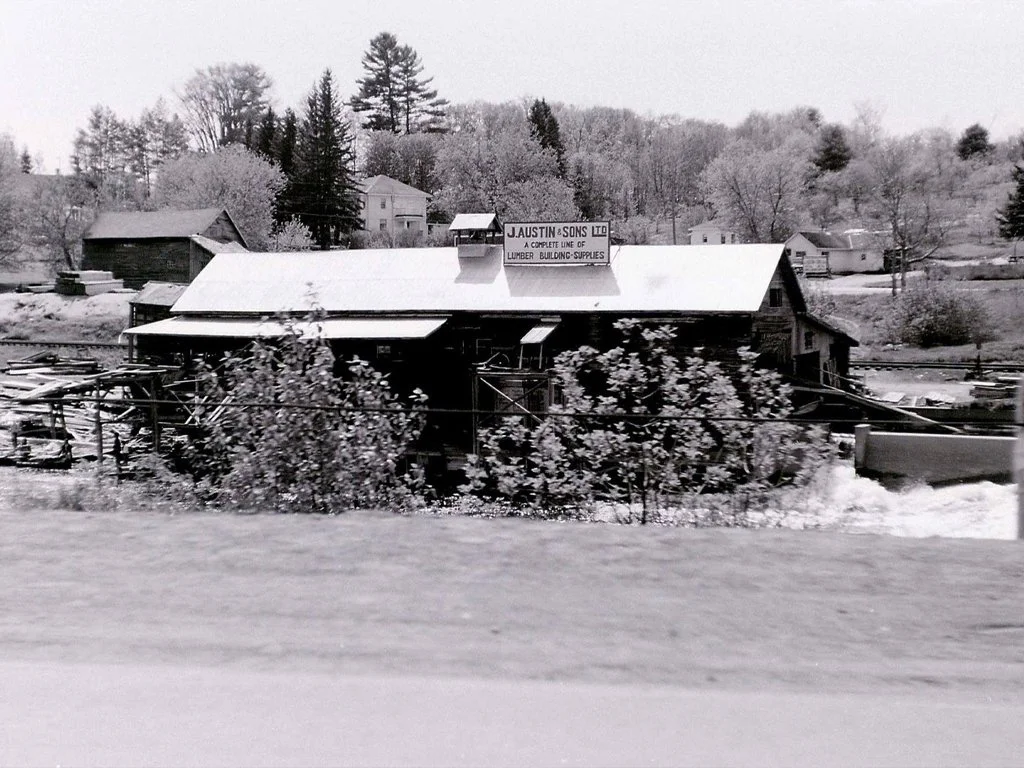
Austin Mill, 1975
Over the course of the twentieth century, the lumber market changed. The days of exporting lumber by train came to an end, as stamped lumber became a requirement for construction. Instead of exporting millions of feet of lumber each year, today tractor-trailers bring lifts of spruce lumber produced many miles away. J. Austin and Sons continues to operate as a Castle Building Centre, just up the hill from the old sawmill on the shore of the Burnt River—Somerville Township began to restore it as a heritage site in September 1983. In the late nineteenth century, communities throughout the region typically had at least one sawmill, built at water’s edge to receive the logs floating down the river—being the most prominent buildings and largest employers in town. Today, Kinmount’s Austin sawmill stands as a solitary reminder of the days when logging companies were the largest businesses around.