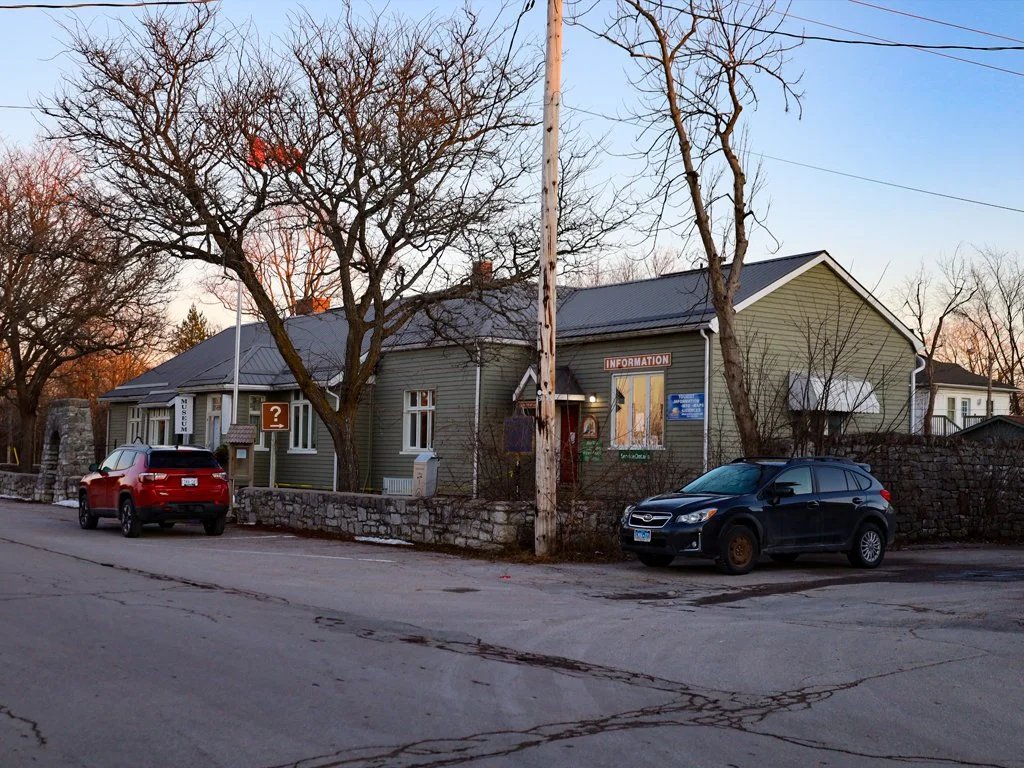
Boyd Office – Boyd Heritage Museum
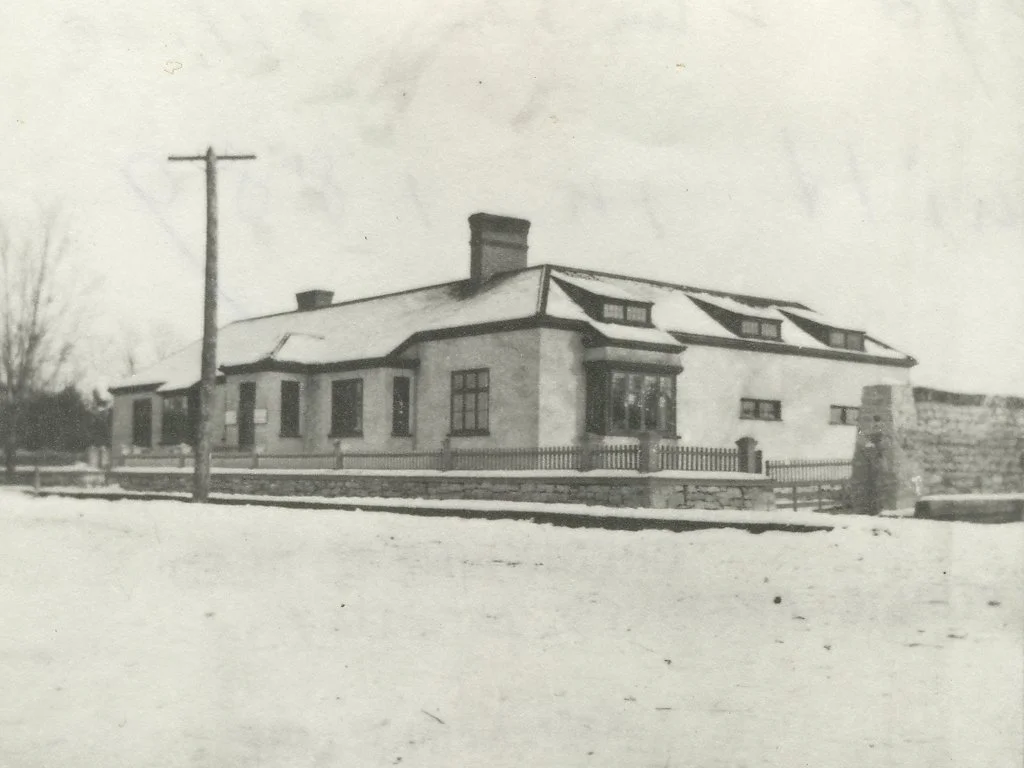
Mossom Boyd emigrated as an orphan in 1834 to visit friend John Darcus who had settled west of Bobcaygeon on the north shore of Sturgeon Lake. Darcus persuaded him to stay, and Boyd took up a farm nearby. His friend soon moved on, and Boyd accepted a job working for the miller, Thomas Need, who owned the nascent village of Bobcaygeon. As Need also moved on to other ventures, Boyd was left to manage the grist and sawmills. Other businessmen offered to buy the property, but Need thought it should be saved for the “one who has borne the labour & heat of the day.” Eventually—on September 2, 1869, more than thirty years after Need had first entrusted him with the mills—Boyd completed the purchase of Need’s interest. By the time he passed away in 1883, he had risen to be one of the wealthiest and best-known businessmen in Canada.
Mossom Boyd was an ambitious, hard-driving man. He was not afraid to get his hands dirty, and personally went on log drives as they made their way town the Trent Watershed. His sons grew up in very different circumstances, built on their father’s hard work. Having come of age as members of Canada’s business elite, keeping up appearances was a necessity. They lived in a mansion, behind stone walls, with servants (it was necessary to host many visiting business associates); travelled in yachts or fine carriages; wore fine clothes, smoked imported cigars, and hired private tutors for their children. Mossom’s record keeping had been relatively scant, but his sons were trained in business, and meticulously filed their paperwork, even unsolicited business correspondence (what we would today call junk mail, but in the nineteenth century it was hand written). After Mossom died, his sons decided that instead of conducting the business out of the Big House, they needed an office, which opened on the other side of William Street in 1889.
The Boyds were anglophiles, and their office was an English Cottage Style design. A one-storey tall building, facing the canal, with additional space in the rear, it had tall eyebrow windows set into the roof line that opened with brass levers and locks. Similarly, the interior doors were tall and wide, with brass hardware. In that era, many visitors coming to Bobcaygeon from a distance took a steamship, and the entrance to the building was conveniently located across the street from the village’s lower wharf. Boyd’s grist mill still stood beside the canal, and the sawmill had operated there before being superseded by the larger Little Bob Mill. It was right at the heart of Bobcaygeon.
From the canal, visitors would walk across the road, through a gateway in a stone wall, into the main entrance. As they came in, they saw a long row of cabinets to waist height and a wide cabinet with narrow drawers that held maps relating to the business ventures (their extensive land holdings, timber limits, etc.) They had a couple more banks of drawers, a slant top desk with narrow drawers and a further group of drawers. The company clerk sat on a tall stool behind the desk where he kept the records. A large walk-in vault with double steel doors and a large combination dial was built into the rear wall directly behind the cabinets.
To the right of this room, a fine wooden door led into Mossom Martin (Mossie) Boyd’s office. This is a large space with a fireplace and a large window overlooking the Canal. There are bookshelves on the outside walls, similar to the bookshelves in the front room. Years later, after Sheila Boyd donated the building to house a permanent library, an extension was built on to this office and used by the Township of Verulam, now the Chamber of Commerce.
Another hallway off the main room led down two steps into a wood storage room—needed to feed the fireplaces that heated the building. This storeroom also kept other supplies, including some destined for lumber camps. A large steel vault stood in one corner, and a door led outside to the rear of the building. A staircase at the front of the room led up to the attic, where the records of the company were kept in two rooms. The only light came from a window in each room, built as dormers into the roof.
W.T.C. (Willie) Boyd’s office was on the left side of the main room. Willie operated the Trent Valley Navigation Company, and served as the Reeve of Bobcaygeon. Initially, the Boyd family’s steamships were primarily used to tow logs to the mill and lumber to market (typically via the railway at Lindsay), but by the 1890s, it offered an integrated network to travellers. Willie helped oversee construction of the Lindsay, Bobcaygeon and Pontypool Railway, which ironically was completed just as the sawmill was winding down, and would take much of the traffic from the Trent Valley Navigation Company. But it was a great convenience for Bobcaygeon residents and businessmen. Willie booked passengers and goods for the railway, as he did for the steamship company.
Passing through Willie’s office, the front room of the building served as the Boyd children’s private schoolroom. Mossie travelled to Oxford, where he found an appropriate teacher, Walter Comber, and invited him to emigrate to teach the brothers’ children. The children had a beautiful schoolroom, with pine bookcases, from floor to ceiling and a large fireplace. The next room to the south had a vaulted ceiling and large windows. There were hooks on top of the bookshelves, that Willie used to roll up maps. Four large iron hooks on the ceiling supported ropes that the children could shinny up if the weather would make playing outside unpleasant. Its fireplace was back-to-back with the one in the front room.
Mossie’s daughter Sheila donated the building to become the library (east wing), alongside the offices for Bobcaygeon (centre) and Verulam (west wing) in 1953. She commissioned an addition to house a non-fiction room, and a large room below that was art gallery, where she would teach. John Grant built the addition in 1967, which was carefully designed to resemble the old building. The lumber office had been built before the advent of electricity and indoor plumbing, so Sheila ensured that there was a washroom built onto the art room—the only one in the building.
By the time the office was built in 1889, the Boyd family’s ventures had extended well beyond Bobcaygeon. At the same time, the days of Boyd’s Bobcaygeon mill were numbered—this was the primary source of profit for the company. When Mossom Boyd had started out, there were a great many old growth trees that stood in the way of agricultural development. By the 1890s, timber limits had become quite valuable and rather than spending a fortune on standing timber at the far reaches of the Trent Watershed, or even in the Muskoka Watershed, Mossie Boyd decided to shift production to Cowichan, on Vancouver Island. The Boyds also had an 8,000 acre stock farm near Prince Albert Saskatchewan, and owned lands in the Northwest Territories. Mossie was busy breeding the horns off Hereford cattle and trying to cross cattle with bison to boost beef production—he would be inducted into the Canadian Agricultural Hall of Fame for his efforts. But their Bobcaygeon ventures were coming to an end.
The last load of lumber left the Little Bob Mill in 1906. From then on, the Trent Valley Navigation Company never again turned a profit and relinquished its charter in 1915. Mossie passed away in 1914, followed by Willie five years later. For generations their office, homes and the massive barn south of town stood as Bobcaygeon landmarks. Today, the office and barn remain as reminders of the era when one of Canada’s most notable Bobcaygeon business ventures was based in Bobcaygeon. The Big House burned in 1994, and its stone walls were crumbling. Dirk Van Oudenaren and Bernie Gehmair relocated an archway from the home, which now stands in front of the main entrance to the Boyd Heritage Museum, welcoming visitors to learn about the Boyd Family by walking up the steps that once greeted steamship visitors to Bobcaygeon.