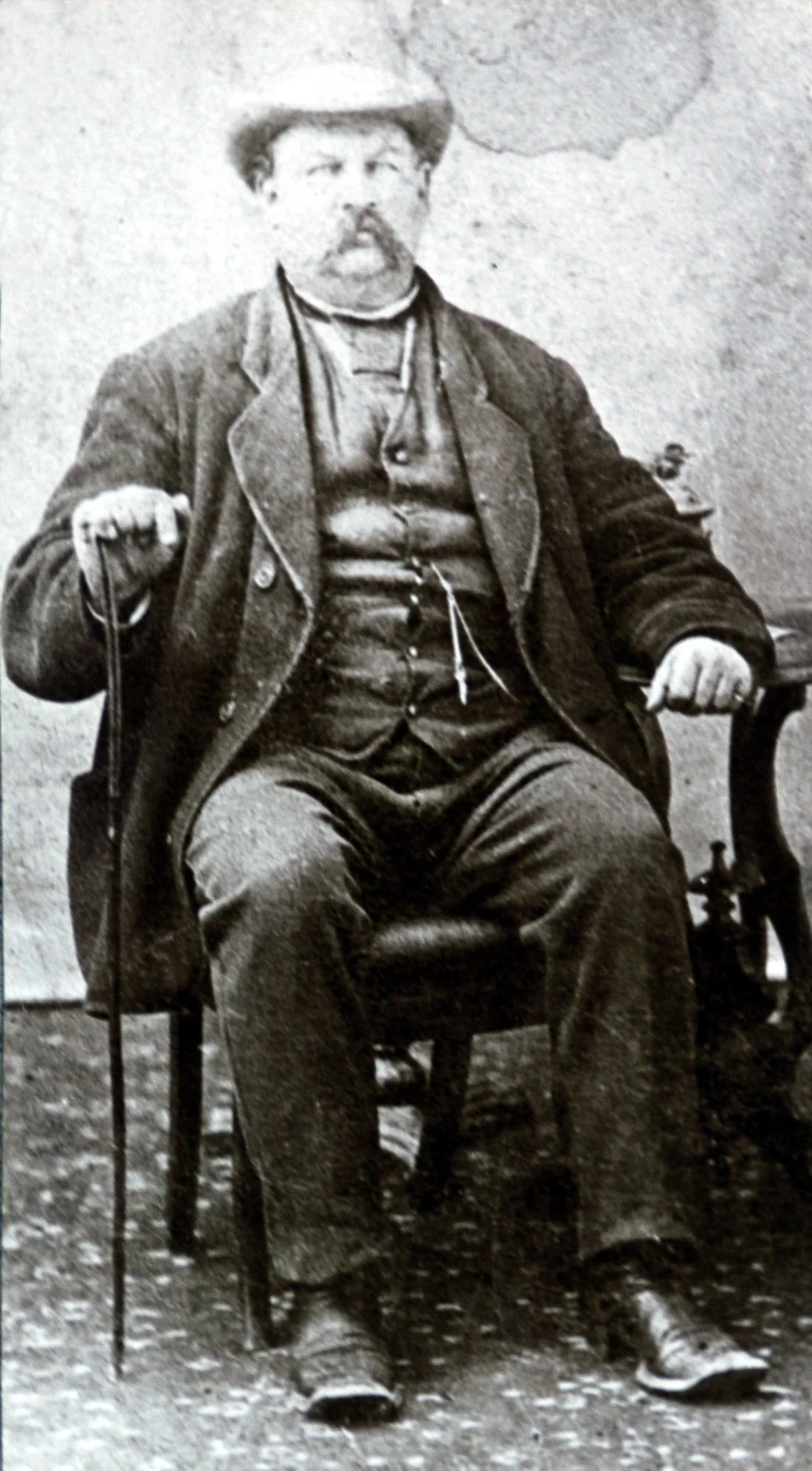
George Crandell was born in Borelia, near Port Perry, in 1828, where his family were the first deeded settlers and also members of the Markham Gang, a society of thieves who had agreed to be mutual alibis. Though they got away with their escapades for a while, it became noticeable that the same group of people were either the suspects or alibis in a rash of crimes that had escalated to murder. Seventeen-year-old George was caught red-handed stealing his neighbour’s gun and sentenced to five years of hard labour in the Kingston Penitentiary. Incarceration certainly did not soften George at all, but when he was released in 1850, he set out in a new direction from the life of crime that he had known as a child.
Crandell returned to Borelia, then took a job working on the first steamer on Lake Scugog, the Woodman. After the vessel caught fire, his employer moved on, allowing George to purchase and refit the boat—just as Canada was signing a reciprocity treaty with the United States, which made the export of lumber practical by vastly reducing tariffs. Reflecting its name, the refitted Woodman was kept busy towing timber on Scugog and Sturgeon lakes to Port Perry, which was then the most convenient route to reach Lake Ontario from the Upper Trent Valley.
Crandell admired shipping magnate Cornelius “the Commodore” Vanderbilt, who was by then likely the richest man in the world. From New York, Vanderbilt had risen through inland shipping, then invested in railways. Like his hero, Crandell would become a commodore of his own fleet, as he built up an interconnected network of ships. In 1873, Crandell christened the Vanderbilt, the largest and most comfortable passenger ship in the area, running regular service on Scugog and Sturgeon Lakes. He had become the most successful steamship operator in the region.
Owning a fleet of ships made it possible to offer passenger service that coordinated with the rapidly expanding rail networks to make recreational travel practical. He recognized the natural beauty of Sturgeon Point and opened the luxurious, three-storey Sturgeon Point Hotel three years later. It soon boasted a dance hall, bowling alley, shuffleboard courts and bathhouses. He operated another hotel in Fenelon Falls until the Great Fire of April 21, 1884, started in its kitchen.
Crandell did not dabble in the hotel business long, selling the Sturgeon Point Hotel to E.H. Dunham of Cobourg in 1883. But he recognized the potential of Sturgeon Point for cottaging, subdividing the property he retained into building lots. By taking a trip on one of his steamers, prosperous Lindsay business owners could enjoy summers on Sturgeon Lake without neglecting their enterprise. Before long, Sturgeon Point had become a much-loved cottage community. He retired at the end of the 1901 season, fifty years after the Woodman was launched at Port Perry, and died three years later.
In the end, he was remembered as one of the feistiest characters on the back lakes. In 1876, he punched out the Lindsay lockmaster, Robert Douglas, who refused to put his boat through after the locks had closed and he had gone to bed. Crandell feuded with the Boyd family, and boiled over when their log drives blocked navigation in the Fenelon River. Throughout his life, Crandell would not back down from any adversary. As a 56-year-old, he singlehandedly took on a group of roughs on the streets of Lindsay, including the notorious outlaw Paddy Bain. Though he had his skull fractured and ribs broken, Crandell lived to tell the tale, being as strong-willed as ever. He may not have won the fight, but there was no doubting he had guts. Despite (or perhaps because of) all of the transgressions he committed relative to genteel Victorian notions of propriety, he was one of the leading figures of late nineteenth century Lindsay. Beginning in 1866, George Crandell served on the Town Council for 32 of 33 years. As in all his pursuits, no one on Council would ever forget the unique experience of working with Lindsay’s commodore.