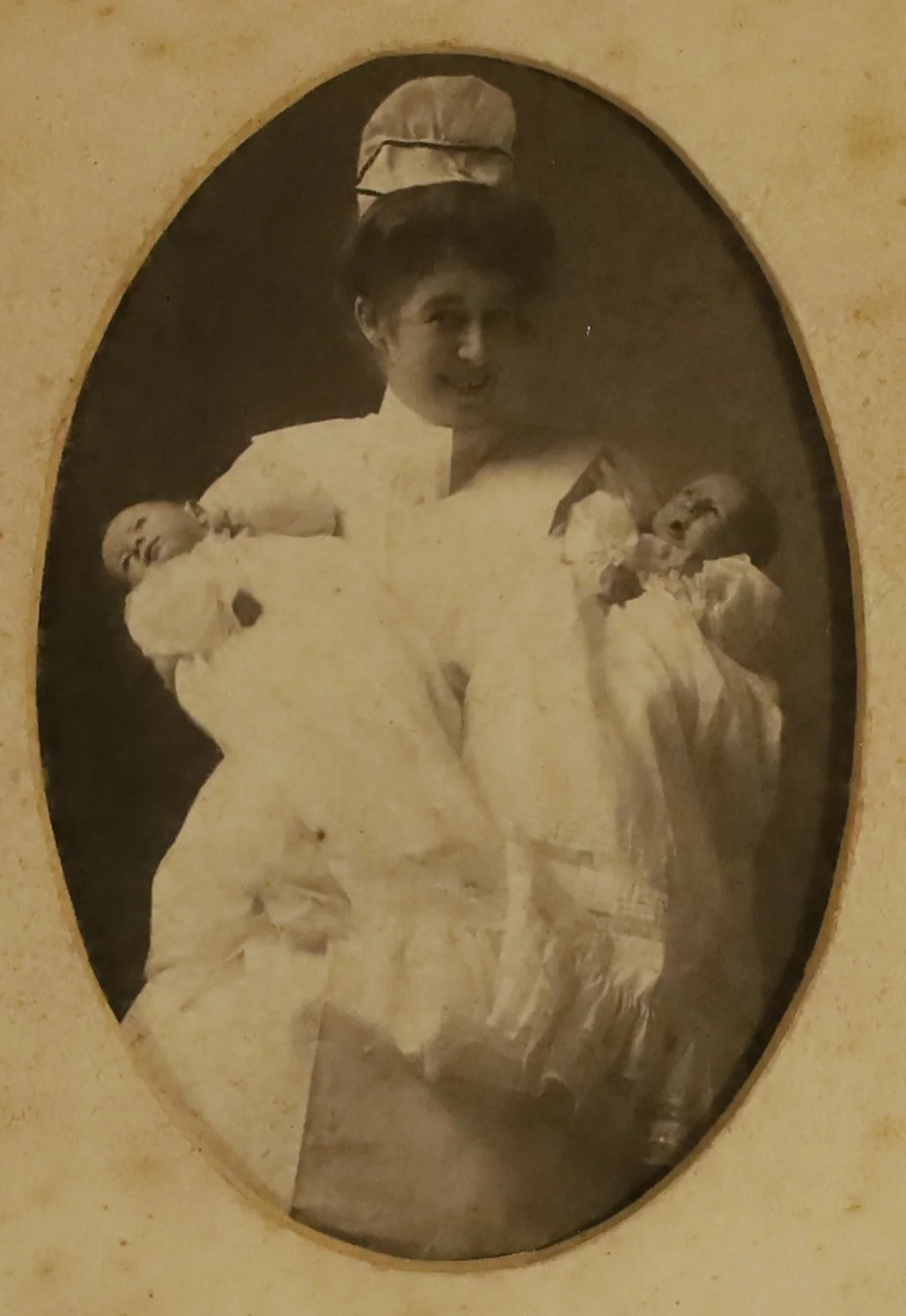
As a young woman, Marion Henderson taught at Fenelon Falls Public School, one of the few careers that were socially acceptable for women in that era. After the Great War began in 1914, calls went out across the British Empire to recruit young men and women to serve overseas. Marion signed up to do her part, and like many of the other youth, had no idea of the adventure that lay ahead.
Surviving a trip across the U-boat-infested waters of the Atlantic Ocean, Marion arrived in Great Britain, then was taken to Cliveden, a beautiful home on a 375-acre estate near Taplow, in Buckinghamshire. Home to the Astor family (descendants of the famous American financier), it is one of the most striking homes of the National Trust. When the First World War broke out, the Astors made their estate into a hospital—the Duchess of Connaught Red Cross Hospital, which treated Canadian soldiers. The first patients arrived in 1915, and it would serve until September 15, 1919, nearly a year after the armistice.
While we often focus on the experiences of active service, nurses and soldiers alike had time off. Many would make the most of it, touring the British countryside, attending social events, and, in Marion’s case, spending quiet time at one of England’s most beautiful estates. At the same time, Marion was part of one of the most scarring human tragedies in history. Convoys of Canadian soldiers arrived at Taplow’s train station for transfer to Cliveden via motorized ambulances---which were then on the cutting edge of technology.
As the soldiers arrived at Cliveden, many were fortunate to be alive, having left their fallen comrades behind, “Somewhere in France.” But they were also now facing a lifetime of coming to grips with their war wounds—missing arms or legs, being scarcely able to breathe after a gas attack, or wondering if they would ever be able to get out of bed again. Marion and the other nurses at the Duchess of Connaught Hospital did the best they could to help the soldiers recover from their injuries. Over the years, she treated many grisly wounds. The nurses did everything they could to make the patients feel at home, listening to phonographs and hosting Christmas celebrations. One day in 1917, they even welcomed the Royal Family to the hospital.
As the soldiers lay convalescing in their beds, they often developed close friendships with the nurses that were caring for them. Marion had a sketchbook where her patients would demonstrate remarkable artistic abilities, and some even wrote verse to share with their nurse. When peace finally came in 1919, and the hospital closed, Marion returned to Canada and continued to help war veterans recover from the horrific injuries that they had suffered. She worked at Toronto’s Christie Street Hospital, then went on to have a nursing career. Marion received several medals for her distinguished overseas service and, in 1936, was invited to join the Canadian Legion Pilgrimage to attend the unveiling of the Canadian National War Memorial at Vimy Ridge.