Maryboro Lodge Personality: Sir William Mackenzie
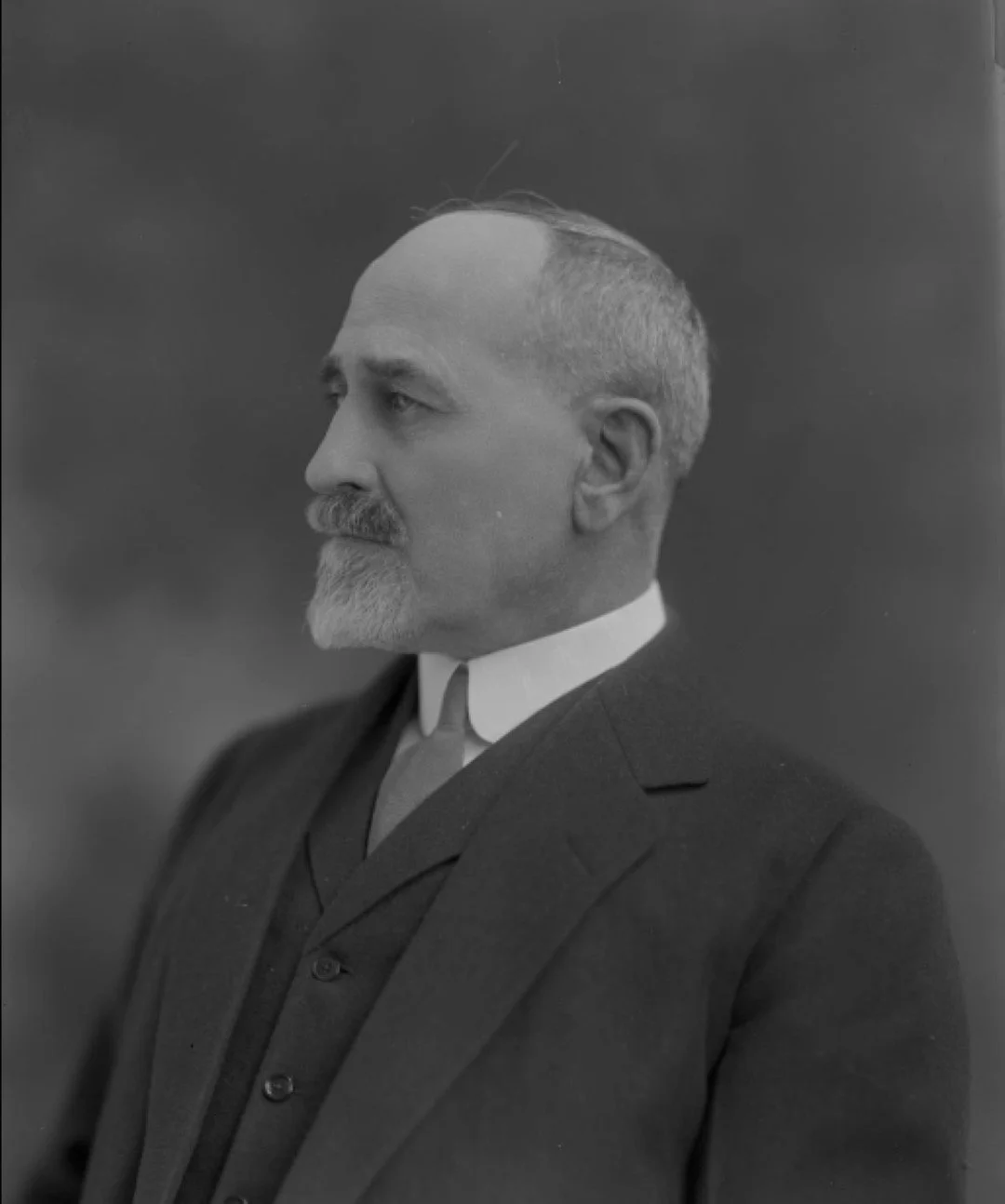
William Mackenzie was born in a log shanty near the Portage Road in North Eldon Township in 1849—the ninth child of a poor tenant couple. Unlike many boys in his era, he moved to Lindsay to complete grammar school, which allowed him to become a teacher at age 19. Two years later, he and his brother opened the Shoofly Store in Kirkfield and a construction business. Initially constructing buildings, his life would never be the same after George Laidlaw hired him to build bridges and Kinmount station for the Victoria Railway.
William Mackenzie soon earned a reputation as an excellent contractor, which attracted the attention of James Ross, the project’s chief engineer—who would go on to oversee the Canadian Pacific Railway. Mackenzie got another job working on the Credit Valley Railway, then for Ross on the CPR. Soon he was one of North America’s best-known railway contractors. It was a very lucrative business and made Mackenzie into a millionaire. He then went on to build Toronto’s electric railway (precursor of the Toronto Transit Commission), before building similar transportation networks in Montreal, Winnipeg, and Birmingham, England.
In 1895, William Mackenzie partnered with Donald Mann to obtain his own railway charter and in the years that followed, acquired the charters of many railways. His railway ventures would merge into the Canadian Northern Railway, which was initially a route to take immigrants to the northern prairies. At some point, they began to dream of building a transcontinental railway. As they worked towards building another national railway, they secured government backing whenever possible. But often they had to offer bonds on their own credit, as they built a line across the northern prairies, which would not be as profitable as the Canadian Pacific Railway. Locally, they purchased the IB&O railway, which connected settlements such as Howland Junction, Irondale, Wilberforce, Baptiste and Bird’s Creek—none of which would ever be mistaken for a metropolis.
By the time that Mackenzie and Mann were knighted in 1911, they were trying to sell $55,000,000 in securities on the London market to finance the construction of the CNoR—about 30% of all Canadian securities for sale in London that year. By 1914, Henry Ford’s assembly lines had made automobiles much more affordable. Beginning in urban areas, motorized jitney (or taxi) services began to spring up, which would compete with railways. Investors became reluctant to pay the face value of railway securities, even if they were backed by the government. He persuaded Prime Minister Robert Borden to guarantee $45,000,000 in bonds in 1914. Costs spiralled as the CNoR built a tunnel through Mount Royal and as they headed west through the mountains from Edmonton to the Pacific Coast. Then, on August 4, 1914, Sir William Mackenzie heard the news that Great Britain had declared war on Germany. He knew what it meant: “I’m finished,” he remarked, as his face became ashen.
Mackenzie had been there when Donald Smith drove the last spike on the Canadian Pacific Railway, but his own last spike ceremony in 1915 did not match the jubilation. As Mackenzie drove the last spike himself, was the last nail already in the coffin of the Canadian Northern Railway? By 1917, the CNoR had become a serious national political issue because it owed so much money that it threatened the solvency of the Bank of Commerce. At about the same time, the Grand Trunk Railway became insolvent while building another transcontinental railway. The GTR and CNoR were nationalized into the Canadian National Railways (later CN).
Though the Canadian Northern Railway was insolvent, Mackenzie remained personally solvent and one of Toronto’s most prominent businessmen. Years earlier, he had given his old Kirkfield classmate, Pat Burns, a contact to supply meat to feed railway workers. Mackenzie owned stock in Burns’ company, which would later become part of Maple Leaf. Who would have imagined that two Kirkfield school chums would one day become two of Canada’s leading businessmen? Mackenzie passed away in 1923 and was buried in Kirkfield, not far from the unassuming log shanty where he entered this world.