Maryboro Lodge Personality: Gladys Suggitt
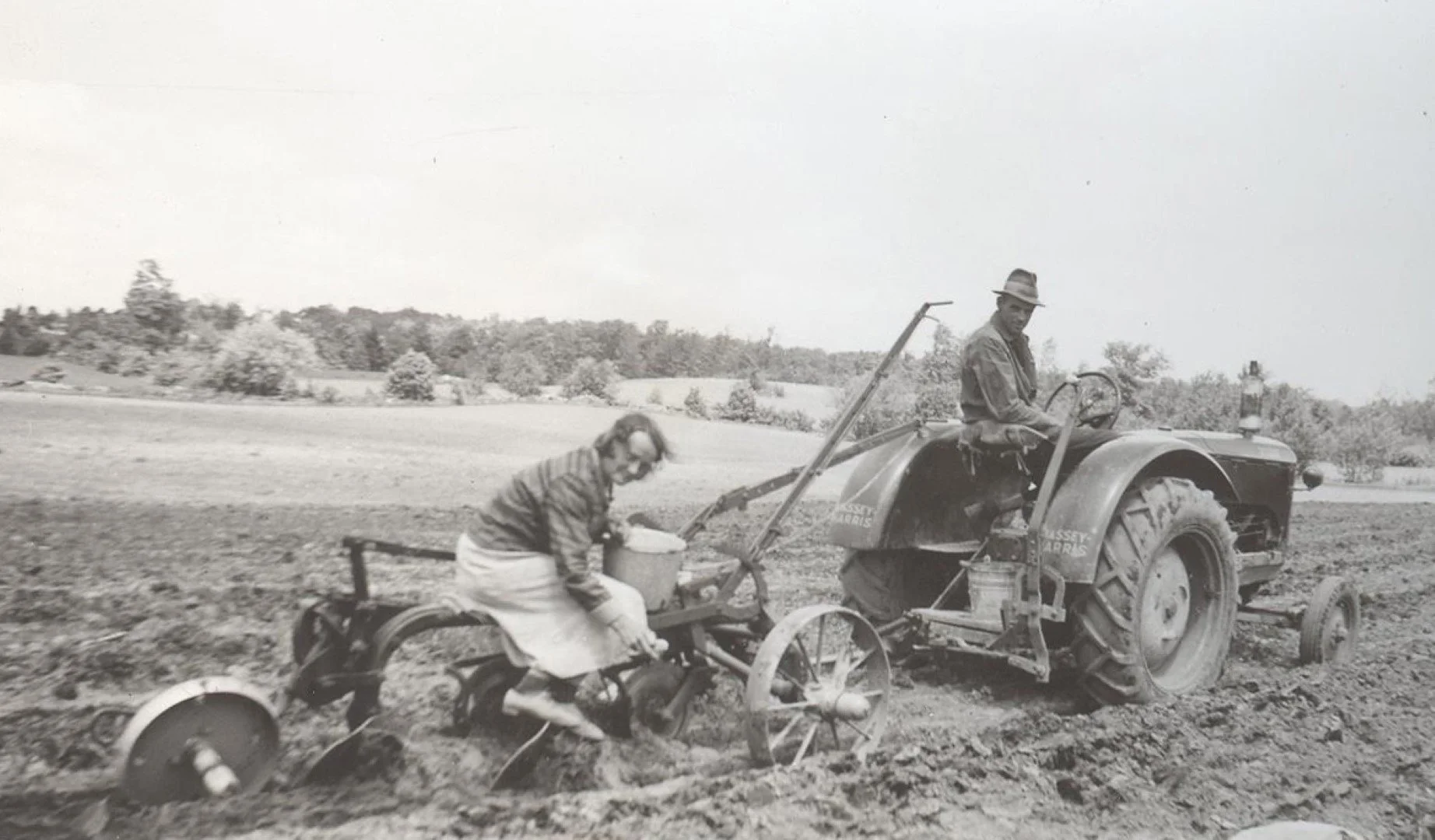
Gladys and Maurice Watson planting potatoes
Gladys Suggitt was born at Baddow on February 21, 1911. She grew up in a community where men tended to be farmers and women did domestic work. When she was in Grade 7, she was informed it would be her last year of school, because her older brother’s wife had tuberculosis and her help was needed. She was granted the opportunity to attempt to pass Grade 8 and succeeded as an Honours graduate of Baddow’s one-room school. At that time, few Baddow children had the opportunity to complete secondary school.
When she was 18 years old, a world away, the New York Stock Exchange collapsed, so she would come of age during the Great Depression. As many of her peers were marrying, she stayed at home and worked alongside her parents. After her parents passed, she carried on the farm herself, doing both the farm work and domestic labour, which was highly unusual for that era.
One day, she saw an advertisement in the paper from a woman looking to do domestic work for the summer. Lola Potter lived in Toronto and was looking to escape an unfortunate marriage. At that time, divorce was not an option, so couples would just separate. Gladys could use help, so she answered the advertisement, and Lola came to work for 4 months, which turned into 40 years. They became the best of friends. At the time she arrived, Lola had two children and was expecting twins.
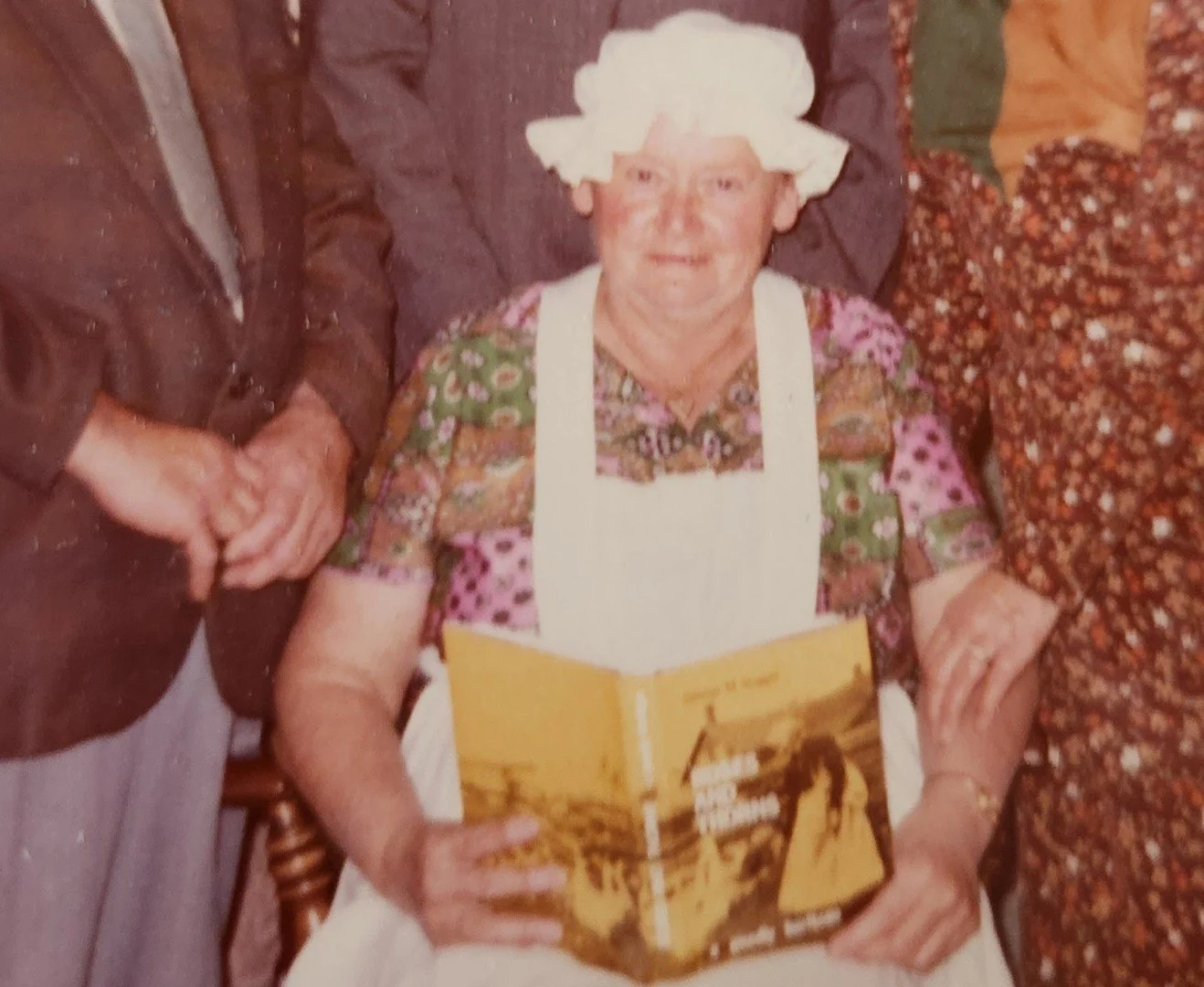
Gladys Suggitt with Roses and Thorns
When one of the twins, Kathy, was in Grade 6, the Lakeview Women’s Institute sponsored an essay contest on the school’s history. Gladys helped Kathy with the research for her project, and it became a hobby. Whenever she had a little free time after the farm chores were done, she would work in her room on history, late into the night. She talked to many seniors in her community, read any old documents she could find, and slowly compiled a local history book. Having been raised not to waste any paper, most of Roses & Thorns was compiled on the back of papers that came in with something printed on the opposite side. Her friend Janet Ellis edited the text, and neighbour Edith Watson transcribed the “scrawly” handwritten manuscript on a typewriter. Edward White saw to it that it got published. Released in 1972, Roses & Thorns was so successful that it was printed three times. Written by someone who lived as a farmer and housewife in Baddow, it is a very authentic account of the region’s history and is much appreciated by local historians.