Maryboro Lodge Personality: James Wallis
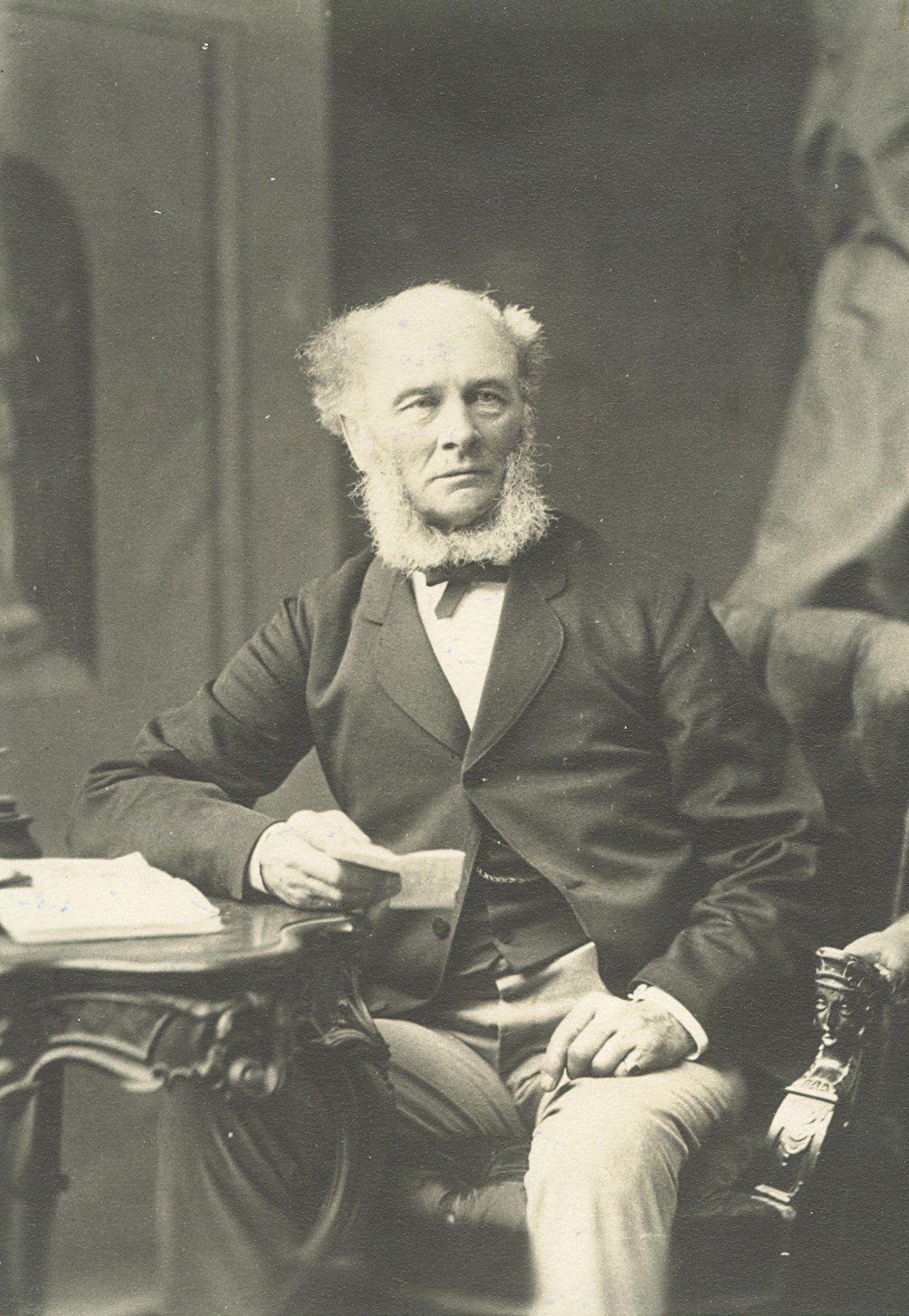
James Wallis’ father owned the Maryboro Estate and Drishane Castle in County Cork, Ireland. The family was one of the protestant British houses that became overlords in Ireland after King William’s military victories ensured the protestant ascendancy in both Ireland and England. James’ family embodied wealth and power in his home community, but as a younger son, James would not inherit the family fortune and had to make his own path in life, with the advantages of an education and elite upbringing.
At age 27, he emigrated to Upper Canada and took on an ambitious, speculative business in partnership with Robert Jameson (grandson of John Jameson, the famous Dublin distiller) in 1834. They speculated massively in property, concentrated around Fenelon Falls, but also including the harbour at Windsor (since renamed Whitby) and town lots in Lindsay and Peterborough. Their local holdings included 22.7% of Fenelon Township and 9.3% of Verulam Township. They purchased Lot 23, Concession 10 of Fenelon, which included the falls, from Duncan Cameron, a Toronto banker and the provincial secretary. Wallis spent more time at Fenelon Falls than Jameson—and was often in practice seen as the village’s proprietor. He liked to say that his native appellation was “Ogemah”—Ogima/Gimaa is a civil chief, so he thought of himself as chief of the village. As the village’s proprietor, Wallis could build anywhere he chose, and Maryboro Lodge came to mark the head of the Fenelon River at Cameron Lake (for a gentleman like Wallis, it was a lodge in the backwoods, not a proper country home).
In this era, many nascent settlements in Upper Canada were privately owned—which was always a speculative venture. To help attract settlers, Wallis operated a tavern, store and mills at the falls. He donated land to build a church and led services until the community attracted a minister. He surveyed village lots around the falls. But not many of them sold, and as the years passed, the financial pressure he faced mounted. Hope dwindled that Fenelon Falls would rapidly pay off as an investment. In 1842, Wallis moved to Peterborough, where he operated a steamboat, the Ogemah and founded a new estate, Merino. He raised fine livestock, and his daughter, Katherine, became an internationally renowned sculptor.
As Jameson and Wallis both moved on to other lives, Fenelon Falls was left to languish—though he later built a stone grist mill for the benefit of local residents. In time, his property was liquidated, and other entrepreneurs stepped forward to rebuild or supersede their ventures. R.C. Smith became the village’s prominent miller, while visitors had several hotels to choose from. The original log St. James Anglican Church was replaced by a frame chapel that became a local landmark. By the time James Wallis was an old man, Fenelon Falls had developed into a village—largely after his holdings were liquidated. In the years that followed, Maryboro Lodge became a tourist lodge. In October 1959, Ontario Premier Leslie Frost dedicated an historic plaque to James Wallis as a community founder in front of his old home. In 1963, Maryboro Lodge became Fenelon Falls’ museum and continues to welcome thousands of visitors each year.