Maryboro Lodge Personality: Mossom Boyd
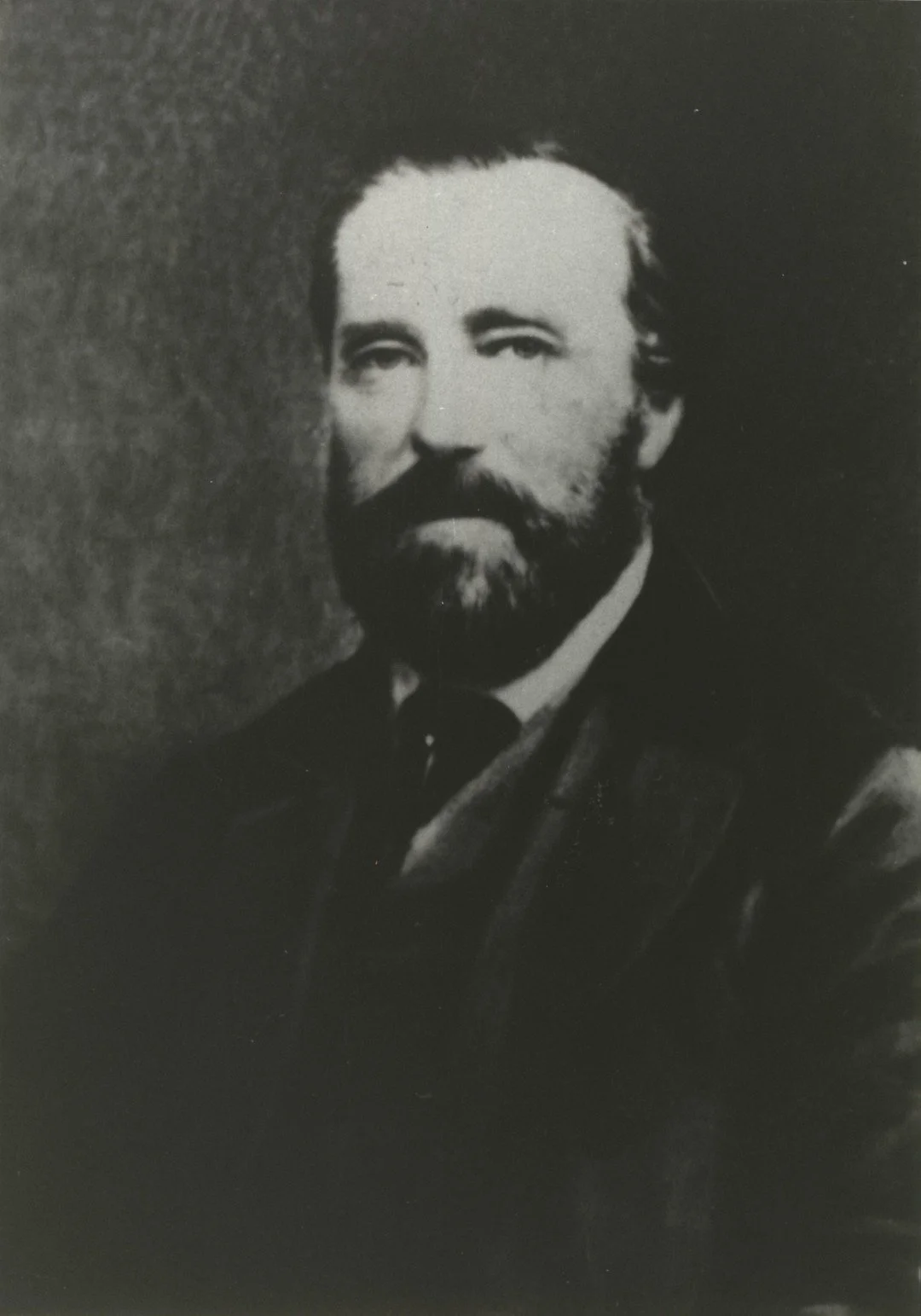
Mossom Boyd’s father served in the British Army in India, then at age 14 both his parents died of cholera, leaving him and his sister Anne in the care of guardians in London. He later recalled, “I was intended for the army & was only waiting about to be sent to India,” when at age 19, he went to visit a friend, John Darcus, “a wild reckless but clever fellow, something like a storm in his flighty ideas.” Arriving at Darcus’ clearing on the north shore of Sturgeon Lake, he was taken aback by what he found. This dandy, who was known for his foppishness, looked very different than in the old country: “His ragged shirt & pants, his close-cut hair, face all red with gored blood from mosquito bites. … I felt like turning back, but he insisted on my stopping a week with him, which I did.” Boyd decided to stay, started his own clearing, then took a job working for Thomas Need, who owned the recently constructed mills at Bobcaygeon.
When Mossom Boyd arrived in the Upper Trent Valley, there were many younger sons of British elites who were looking to create estates in the region. Boyd was an orphan, and he did not have the same social pretensions. He was frequently, though not always, absent from the Sunday teas, chess matches and outings of the University Club members—graduates of Oxford or Cambridge. But he knew how to work! He developed a reputation as being an extremely industrious, determined, meticulous, hard-driving man who got things done. He would become the only one of these aspiring young Sturgeon Lake gentlemen to make a sustainable livelihood in the community.
When Need returned to England, Boyd took over the management of his mills. In 1848, he ran his first raft of timber to Quebec, only to arrive in the year of the greatest recorded timber glut. Boyd always found a way to keep working, with business partners and Need’s generosity. Eventually, on September 2, 1869, more than thirty years after Need had first entrusted him with the mills—Boyd completed the purchase of his interest, which included the Village of Bobcaygeon.
Mossom Boyd rose to become one of the best-known and most successful timber barons in Canada. After the railway reached Lindsay and the colonies of British North America signed a Reciprocity Treaty with the United States, American lumber exports superseded the British timber trade as the primary market. Boyd did not own the largest sawmill in the region, but he found a way to succeed in a high-risk business, where many of his peers went bankrupt.
Boyd was never the same after suffering a stroke in 1880, and control of the business passed to his son Mossom Martin or Mossie Boyd. By the time he passed away in 1883, he owned Bobcaygeon and was one of the most powerful men in the district. The single-minded determination that made him so successful, made many people admire him or despise him. His family would live in a mansion, behind a stone wall, gated off from the rest of the community. Called ‘the Big House,’ it brought back the memory of the Big Houses back in Ireland. There were many Irish settlers around Bobcaygeon, and as had happened during the Protestant ascendancy on the other side of the ocean, one Briton ended up owning much of the land in the area and embodying local power. For generations, local families would talk about how cheap he was—that he would pay $1 for a wagonload of stone brought in from farms to build the walls around his home. (In fairness to Boyd, for $1, the farmer could then purchase a load of mill culls, it was trading one waste product for another). In another famous incident, he effectively decided that Bobcaygeon’s wharf was for his business and stacked so much lumber on it that others could not use it. All the government could do was encourage him to move his mill to another location, further from the downtown. Love him or hate him, there was no denying that Mossom Boyd had risen from being an orphan to become Bobcaygeon’s dominant businessman.